Kevins Gardeners for garden maintenance in London

Kevins Gardeners provides garden maintenance in London for homeowners, landlords and commercial premises that need regular, reliable outdoor care. The work can cover routine grass cutting, hedge trimming, border tidying and seasonal garden upkeep, with a practical emphasis on keeping spaces presentable and manageable. Our service is designed to support outdoor areas that need more than an occasional visit, whether the task is straightforward upkeep or a wider refresh of neglected planting and hard surfaces.
We focus on the tasks that most often keep a garden under control: mowing lawns, cutting back overgrowth, clearing leaves and light debris, and shaping hedges so the space looks cared for. Where a garden has become harder to manage, we can combine maintenance with garden clearance to remove unwanted material before regular care resumes. That gives you a cleaner starting point and helps future visits work more effectively.
If you are comparing options, it can help to think in terms of the finish you want rather than a single task. Some customers need a one-off tidy before visitors arrive, while others want a repeat maintenance plan that keeps the same standard across the year. Our aim is to make the process simple: choose the services that match the condition of the garden, then request a quotation when you are ready. For an initial conversation, plain details are enough to begin.
Regular lawn, hedge and border care
Good garden maintenance depends on balanced, repeatable work. Grass cut too infrequently can become coarse and uneven, while hedges left to run on can lose shape, block light and make a boundary feel untidy. We handle these common maintenance jobs as part of a practical service that aims to keep outdoor areas usable and visually neat without unnecessary disruption. Where a garden has different zones, we can keep the front, side and rear areas consistent.
For lawns, the focus is on an even finish, sensible edge definition and the removal of clippings where needed. For shrubs and hedges, trimming is carried out to suit the growth habit and the space available, rather than forcing every plant into the same form. If the job includes overgrown sections, a related visit such as hedge trimming can be used to restore shape before routine upkeep begins again.
Some gardens benefit from a broader service mix rather than isolated jobs. Lawn mowing is often part of that mix, especially where the grass is the most visible feature and sets the tone for the rest of the space. In other cases, borders, paths and beds need attention at the same time so the garden looks cohesive rather than partially finished. Keeping those elements together usually creates a tidier result and reduces the chance of one neglected area spoiling the whole layout.
What a maintenance visit can include

A maintenance visit is usually built around the condition of the garden on the day. That may involve grass cutting, pruning back soft growth, clearing rubbish from beds, and removing the cuttings so the area is left tidy. If the garden is particularly cluttered, it can also include the removal of unwanted waste as part of a more practical reset. The exact scope should be matched to the site, because maintenance is most effective when it reflects the amount of work actually required.
Useful tasks often fall into a simple sequence:
- tidy the access areas and remove loose debris
- trim or cut back the main visible growth
- mow or strim the grass where required
- shape the edges for a cleaner outline
- collect and clear arisings before finishing
Not every garden needs the same depth of treatment. Some only need light, regular upkeep to maintain a clear presentation, while others need a stronger first visit before routine care can take over. If you want a fuller refresh, garden services can provide a wider framework around the work so you can combine maintenance tasks in one plan rather than organising them separately.
Supporting outdoor spaces with one-off and recurring visits
There is a clear difference between a one-off tidy and repeated maintenance. A one-off visit is usually about restoring order quickly, whereas recurring work is about keeping that order in place. For many clients, the best approach is to start with a stronger initial tidy, then move into a lighter rhythm of care. That avoids unnecessary work later and gives the garden a steadier appearance through the seasons.
If you need a broader refresh, garden maintenance is the core service to ask about, because it can be shaped to the garden’s current state and not just its ideal state. We can use it for properties that have been left for a while, as well as for those that need an ongoing upkeep pattern. The result depends on the starting condition, the size of the outdoor area and the type of growth involved, so the quotation should reflect those factors rather than a fixed assumption.
For clients who want a property to look presentable with minimal fuss, regular maintenance can also reduce the need for bigger interventions later. It is often easier to keep control of grass, hedges and borders than to rebuild them from scratch after several missed seasons. That is why many customers choose to pair maintenance with other services where needed, such as targeted trimming or a clearance visit before the routine schedule begins again.
Landscaping work when the garden needs more than upkeep

Some outdoor areas need more than maintenance alone. When a garden layout is awkward, the planting structure is tired or the space would benefit from a different use, landscaping work can provide the next step. That may involve improving levels, redefining planting areas, or making the garden easier to look after in the long term. We approach this kind of work with a practical focus so the result suits the space rather than trying to impose an unnecessary design.
Landscaping can be useful where you want to improve both appearance and function. For example, a poorly arranged garden may feel smaller than it is because surfaces, beds and access routes are not working together. A thoughtful layout can open up the space, improve movement and create a clearer division between areas used for relaxing, growing or simply keeping tidy. The exact form of that work depends on the site and the aims of the project.
Where the work is more plant-led, landscape gardening may be the better description because it places emphasis on planting choices, structure and the balance between hard and soft materials. That can suit customers who want more than a maintenance tidy but do not need a complete rebuild. In practice, the right choice depends on how much of the garden is staying in place and how much needs rethinking.
Garden structure, surfacing and finishing details
After the main growth has been managed, small structural details often make the biggest difference to how a garden reads. Clean edges, clear paths and well-kept boundaries help a space feel complete even when the planting is modest. That is why maintenance and landscaping often work best together: the first controls growth, while the second improves the framework around it. When both are handled well, the result looks more settled and easier to live with.
Useful finishing work may include patio cleaning where hard surfaces have gathered algae, soil or general grime. A clean patio or paved area lifts the whole garden and makes seating, movement and access feel more comfortable. It can also help reveal whether the underlying garden layout is working, because a dirty or cluttered surface often makes a space appear more neglected than it really is. The same principle applies to steps, narrow side paths and small courtyards.
Where the project needs a more robust outdoor edge, garden fence installation and related boundary work can support both privacy and structure. A solid boundary can define the garden clearly, while a worn or damaged one can make the whole area feel unfinished. If the aim is to improve the garden as a coherent space, it is often worth reviewing the boundary, the surfacing and the planting together before deciding which work comes first.
About London
London is a vast city shaped by layered settlement, river crossings and centuries of change. The River Thames remains central to its identity, curving through districts that evolved from Roman foundations, medieval lanes, Georgian terraces and Victorian expansion into one of the world’s most varied urban landscapes. The City of London retains its historic core and compact street pattern, while surrounding boroughs include a mix of high-density commercial districts, residential neighbourhoods, parks and estates that developed at different times and for different purposes. That mixture gives the city a striking architectural range, from stone civic buildings and mansion blocks to modern towers and regenerated riverside quarters. Green space is another defining feature. Large royal parks such as Hyde Park, Regent’s Park and Richmond Park sit alongside smaller commons, squares and nature reserves scattered across the boroughs. The Thames Path links parts of the river corridor, while canals and tributaries add further routes through the urban fabric. Markets, museums, theatres and galleries contribute to a cultural life that is not concentrated in one centre but spread across many districts, each with its own character. Transport, business and housing are closely interwoven, so the city’s districts often feel distinct even when they are only a short journey apart. This constant layering of old and new is one of the reasons London remains immediately recognisable yet still full of local variation.
Materials, waste and practical site care
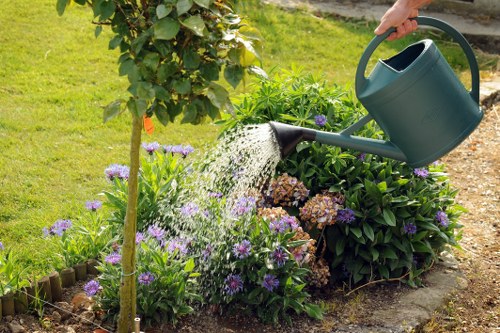
Garden work often produces more than visible improvement; it also generates material that must be handled properly. Cut grass, hedge trimmings, branches, soil and mixed green waste need to be collected, sorted and removed in a way that keeps the site safe and manageable. A tidy finish matters because leaving arisings behind can quickly undo the appearance of a job, especially in smaller gardens where every corner is visible. The practical part of the work is therefore just as important as the cutting itself.
Where waste removal forms part of the service, the aim is to clear what has been taken down without disrupting the surrounding space. That can be especially important after heavier pruning, a clearance visit or the removal of dead material from beds and borders. If you need the garden returned to a clean state after a major tidy, garden clearance can sit alongside maintenance so the work is not limited to trimming alone. The right choice depends on how much waste has built up and how much of the garden needs to be reset.
It also helps to think ahead about access and scale. Narrow side passages, rear access, shared entrances and limited parking can all affect how work is organised, even when the gardening itself is straightforward. For that reason, a clear quotation is usually based on the actual layout of the site and the level of clearance needed, rather than a broad estimate made without context.
Choosing the right combination of services
Many gardens do not need one single service so much as a sensible combination of related work. A hedge might need trimming, the lawn may need cutting, borders could require a tidy and a patio might need cleaning before everything looks coherent. Combining those elements can be more efficient than arranging them in isolation, and it usually produces a better overall result because each task supports the next. The service mix should be chosen to match the garden’s condition and your aims for the space.
When you are deciding what to include, it can help to focus on what is visible first and what is causing the most practical problem. A patchy lawn, an unshaped hedge or a cluttered corner may have a larger impact than a larger but less noticeable area. If the garden includes trees or taller growth, tree surgeon services may also be relevant where pruning or removal is required for safety or access. That said, only the work actually needed should be included in the plan.
Good quotations start with a clear brief, and a brief can be simple. A short description of the area, the main tasks and the level of tidying needed is often enough to begin. If the garden has unusual features or more substantial overgrowth, it helps to mention that too so the scope can be matched properly. For the next step, you can request a quotation in plain words and build from there.
Request a quotation
If you want garden maintenance in London that is tailored to the current state of your outdoor space, Kevins Gardeners can help with regular upkeep, one-off tidying and related outdoor tasks. The best way to get started is to explain what needs doing, what the garden includes and whether you want a single visit or an ongoing arrangement. That gives us enough information to shape a practical quotation around the work rather than around assumptions.
A useful enquiry usually includes the main areas that need attention, any particularly overgrown sections and whether waste removal is required. If you are unsure how to describe it, keep it simple: what looks untidy, what feels difficult to manage and what you want the garden to look like once the work is complete. You can also compare related services such as pricing and quotes if you want to think through the scope before making contact. We will then use the details to outline a suitable next step.
When you are ready, ask for a quotation and tell us which parts of the garden matter most. If the work includes maintenance, clearance or finishing touches, it is best to mention those together so the plan is complete from the outset. For the final step, contact us and request your quotation today.