Kevins Gardeners: Recycling and Sustainability Commitment
 Kevins Gardeners is committed to improving how gardens are maintained while reducing waste and carbon emissions. As Kevins gardening team we set a clear recycling percentage target to drive decisions across every site we work on. Our approach balances practical garden care with a rigorous focus on resource recovery, ensuring that clippings, soil, pots and other materials are handled responsibly. We aim to be a leading sustainable gardener in the area, working within local borough rules and community frameworks.
We have established a company-wide goal of an 85% recycling percentage target for all routine green waste and recyclable materials generated by our jobs by 2030. That figure covers diversion to composting, reuse and responsible material recovery rather than sending material to landfill. Kevin's Gardeners monitors performance monthly and reports on progress internally; small changes like better on-site segregation and route planning help move the needle.
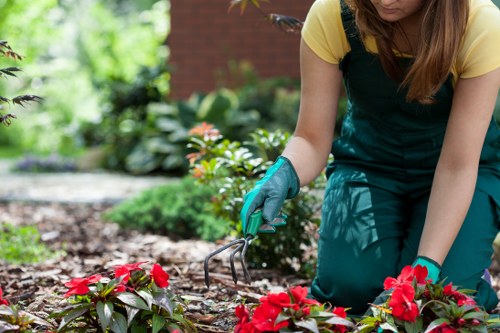 Many of the boroughs we serve use a three-way separation system???organic (green bin), dry recycling (paper, cans, plastic) and residual waste???while others operate a two-bin system with dedicated garden waste collections. We work with local regulations so that our teams sort waste on site into compatible streams. This reduces contamination and increases the chance that material reaches the right local transfer station for processing.
How we manage recycling and transfer stations
We regularly deliver materials to nearby transfer facilities and community composting hubs rather than relying on mixed waste disposal. Typical local transfer stations we use include regional hubs and municipal facilities such as the Riverside Transfer Station, Borough Green Transfer Hub and neighbourhood compost centres. These transfer stations accept green waste, clean soil and inert materials, and route them to composting, mulching or recycling operations. By using local sites we reduce transport miles and keep materials within the circular economy.
 The process we follow includes clear on-site separation into labelled bags or bins: green waste for composting, clean soil for remediation or reuse, hard landscaping materials sorted for recycling, and small amounts of non-recyclable waste sent for recovery. Our teams are trained so that crews from Kevins Gardeners can quickly assess the correct stream for each item, reducing contamination and improving outcomes at the transfer station. The KG crew also records weights and destinations for transparency.
We also use a prioritized waste hierarchy: prevent where possible, prepare for reuse, recycle and compost, recover energy only when necessary, and dispose as a last resort. This hierarchy guides choices in landscaping projects???choosing reusable timber, sourcing reclaimed pavers, and preferring peat-free compost options.
Partnerships, reuse and low-carbon transport
Partnerships with local charities and community organisations are central to our reuse strategy. We work with groups such as community garden projects, tool libraries and social enterprises that accept clean soil, pots and surplus plants. These collaborations include donations to organisations like the Community Garden Trust and GreenCycle Charity, which repurpose materials for allotments and education schemes. Kevin's Gardeners values these relationships because they extend the life of resources and support local green spaces.
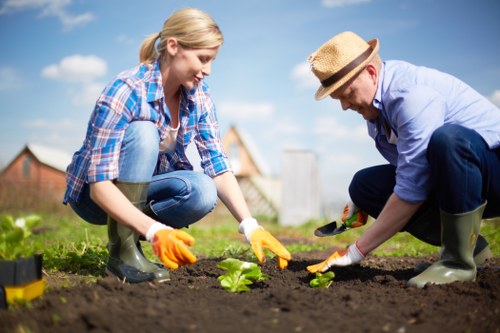 Our reuse partnerships focus on practical outcomes: giving away usable timber offcuts for raised beds, donating young shrubs to schools, and diverting potted perennials to community groups. We maintain a small inventory of reusable containers and propagating materials that can be passed on rather than purchased new. These activities are part of our broad sustainability plan and help the community while cutting waste.
 Transport is another major part of our sustainability program. We have invested in a fleet of low-carbon vans???electric and hybrid vehicles???alongside cargo bikes for short urban trips. The low-carbon vans used by Kevins Gardeners reduce particulate emissions and noise, and when paired with route optimisation they also lower overall carbon output. Our goal is a fully electrified light vehicle fleet by 2035 where practical, with interim targets for incremental replacement of diesel vehicles.
To support these logistics, the KG operations team plans daily routes to transfer stations and charity drop-offs so that fewer miles are driven and van loads are maximised. We also invest in training for drivers on efficient driving habits and vehicle charging behaviours to prolong battery life. Operational efficiency and smart scheduling are simple but effective ways to reduce our carbon footprint.
We publish internal best-practice checklists so every crew follows the same steps: segregate on-site, label materials, bag or containerise for transfer, and record the destination. A short checklist reduces mistakes and improves recycling rates. Our teams are encouraged to suggest improvements???small field-driven changes often have the biggest impact.
Finally, Kevins Gardeners supports borough-level sustainability goals by aligning with municipal waste separation policies and sharing learning with community partners. Through measurable recycling targets, local transfer station partnerships, charity collaborations and a low-carbon vehicle program, Kevin's Gardeners is committed to practical, verifiable actions that keep green waste out of landfill and nurture circular, local solutions.